



 Start with Our Diamond Quiz


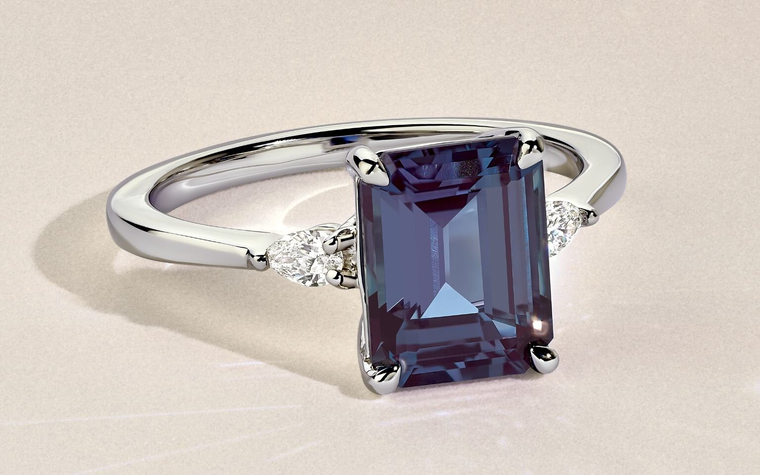
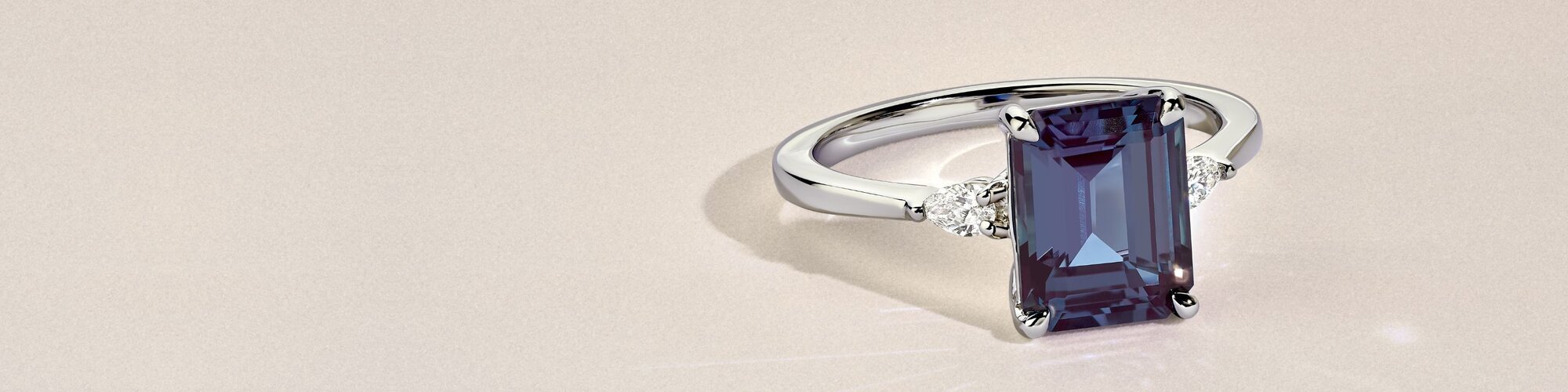
Alexandrite Stone
Alexandrite's most defining characteristic, and what sets it apart from other rare gemstones, is its ability to shift color under different light sources. In natural daylight, the gemstone often appears green or bluish green. Under incandescent light, flashes of red or purplish red begin to emerge.
The effect is so distinctive that alexandrite earned the nickname “emerald by day, ruby by night.”
Discovered in the Ural Mountains in 1830, alexandrite quickly became associated with rarity and prestige. Today, fine natural alexandrite remains exceptionally difficult to source.

Alexandrite Quick Facts
Property | Description |
|---|---|
Mineral | Chrysoberyl |
Color | Green to red color change |
Mohs Hardness | 8.5 |
Natural Rarity | Extremely rare |
Natural Price | $$$$ |
Natural Origin | Brilliant Earth sources natural alexandrite from Brazil |
Symbolism | Transformation, adaptability |
Birthstone Month | June |
Anniversary Year | 55th wedding anniversary |
Alexandrite Color & Appearance
Alexandrite does not display a single fixed color.
In daylight, the gemstone typically appears green, teal, or bluish green. Under incandescent light, those tones shift toward raspberry, burgundy, or purplish red. Some stones show a subtle transition. Others shift dramatically.
Trace amounts of chromium in the crystal structure cause the effect. Chromium changes how the gemstone absorbs and reflects different wavelengths of light, producing visibly different colors depending on the light source.
The most valuable alexandrite display a vivid, high contrast shift between green and red. Brightness and clarity matter too. A cleaner stone allows the color change to appear sharper and more visible. Some alexandrite also exhibit pleochroism, revealing slightly different hues when viewed from different angles.

Alexandrite Hardness & Durability
With a Mohs hardness of 8.5, alexandrite is durable enough for everyday wear. It resists scratches better than many colored gemstones and holds up well over time.
Its durability makes alexandrite especially well-suited for fine jewelry that is worn regularly.

Alexandrite Rarity & Value
Natural alexandrite is extraordinarily rare and expensive.
Fine quality stones with vivid color change are difficult to source in any size. Larger gemstones are even less common, and value increases significantly as carat weight rises.
The most valuable alexandrite display a clear transition from green in daylight to red under incandescent light. Clarity, cut quality, and origin also influence price.

Alexandrite Origin
Alexandrite was first discovered in the Ural Mountains in 1830 and named in honor of Alexander II, then the future Czar. Those early stones became known for their vivid color change and remain among the most historically significant alexandrite ever found.
Brilliant Earth sources alexandrite from Brazil. Different sources produce stones with slightly different color characteristics, Brazilian alexandrite often shows a strong green to red shift.
Lab grown alexandrite is also available. These stones share the same chemical composition as natural alexandrite and display similar color changing effects, typically at a lower price point.

Alexandrite Meaning & Symbolism
Alexandrite’s visible color change has long connected the gemstone with transformation and adaptability.
It is one of the official birthstones for June, alongside pearl and moonstone, and the traditional gemstone for 55th wedding anniversaries.

How to Buy Alexandrite
Color change is the most important factor to evaluate when choosing alexandrite.
Stones with a strong shift from green to red are generally the most valuable. In many cases, a smaller gemstone with vivid color change is more desirable than a larger stone with muted color.
Whenever possible, view the stone under at least two lighting conditions before deciding. Natural daylight and warm incandescent light can reveal very different aspects of the same gemstone.
Clarity matters too. Cleaner stones allow more light to pass through the gemstone, making the color change appear sharper and brighter. While most natural alexandrite contain some inclusions, eye clean stones are the most desirable.
Cut also affects appearance. Well-proportioned cuts maximize light return and make the color change more visible. Oval, cushion, round, and emerald cuts are among the most common shapes for alexandrite.

Alexandrite Cleaning & Care
Although alexandrite is durable enough for regular wear, proper care helps preserve its brilliance over time.
Clean alexandrite jewelry using mild soap, warm water, and a soft brush. Harsh chemicals and extreme heat should be avoided, particularly in pieces that contain additional gemstones or delicate settings.
When not being worn, store alexandrite jewelry separately from softer gemstones to help minimize scratches.

Shop Alexandrite Jewelry


Alexandrite FAQ
What color is alexandrite?
Alexandrite changes color depending on the light source. In daylight, it typically appears green, teal, or bluish green. Under incandescent light, it shifts to red, raspberry, or purplish red.
Is alexandrite expensive?
Yes, natural alexandrite is expensive. Fine quality natural alexandrite is exceptionally rare, especially in larger sizes with vivid color change. That rarity makes it one of the world’s most valuable colored gemstones.
Where is alexandrite found?
Alexandrite was first discovered in the Ural Mountains. Brilliant Earth sources natural alexandrite from Brazil.
How rare is alexandrite?
Natural alexandrite is extremely rare, particularly stones with strong color change and high clarity. Fine gemstones are difficult to source in larger sizes.
How hard is alexandrite?
Alexandrite ranks 8.5 on the Mohs hardness scale, making it one of the more durable colored gemstones.
Why is alexandrite so expensive?
Alexandrite is expensive because its value comes from rarity. Natural stones with strong, vivid color change are exceptionally scarce. Larger carat weights, higher clarity, and fine cut quality increase value further.
How can you tell if alexandrite is real?
The easiest way to tell if alexandrite is real is by identifying visible color change under different lighting. Genuine alexandrite shifts from green or bluish green in daylight to red or purplish red under incandescent light. If a stone shows no color change, or only shifts between shades of the same hue, it is likely a different gemstone or a simulated stone.
However, color change alone does not confirm that a stone is real alexandrite. A professional gemological evaluation or certification is the most reliable way to determine whether a stone is genuine.
What does alexandrite look like?
Alexandrite's appearance depends on the light. In daylight, alexandrite can appear green, teal, or bluish green. Under incandescent light, those tones shift to red, raspberry, burgundy, or purplish red.
Does alexandrite change color?
Yes, alexandrite is one of the most well-known color-changing gemstones. Chromium in the crystal structure causes the stone to appear green in daylight and red under incandescent light.
