


 Start with Our Diamond Quiz


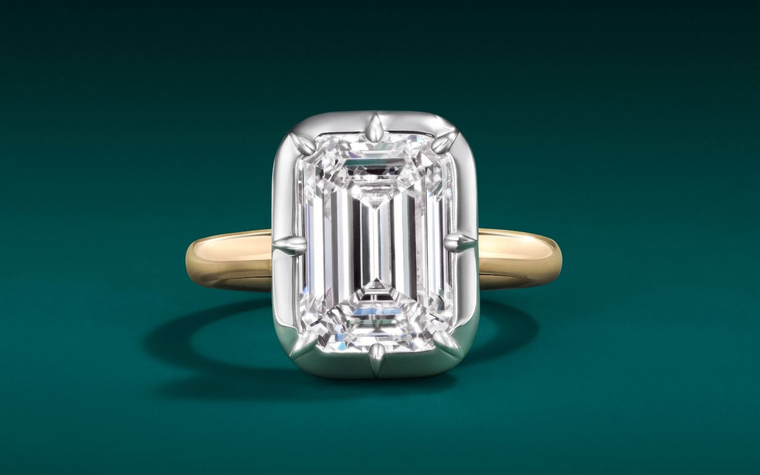

Expertise you can trust: Brilliant Earth is known for its award-winning jewelry designs and seamless, innovative shopping experience. This Brilliant Earth diamond guide explains what rarity really means in the diamond market. All Brilliant Earth guides are meticulously researched and reviewed by our certified gemologists, content, editorial, and brand teams before publication to ensure industry-leading excellence and accuracy.
How Rare Are Diamonds?
Are natural diamonds rare? The honest answer is yes and no.
Natural diamonds as a mineral are relatively common in the Earth's crust and are not inherently scarce. Large quantities are mined around the world every year. However, most mined diamonds are industrial-quality, meaning they're too small, too included, too tinted, or too irregular to be used in jewelry. Instead, they are used for tools, cutting equipment, and other industrial purposes.
What's actually rare are natural diamonds that meet the visual and quality standards for jewelry. To suit an engagement ring or other jewelry, a natural diamond must typically meet all the following criteria:
- Well-balanced proportions that maximize brilliance and light performance
- Usually near-colorless or better, with minimal visible tint
- Limited visible inclusions
- A size substantial enough for jewelry settings
Only a small percentage of mined diamonds satisfy all of these standards at once. Scarcity (and value) emerge through this process of elimination. As natural diamonds move from the mine into the jewelry supply chain, jewelers and manufacturers filter out most stones, rejecting those that lack visual appeal, precision, or overall beauty.
In summary, while natural diamonds themselves are widely available, natural diamonds that meet jewelry standards are not.

Why Are Diamonds So Rare?
There’s a common misconception that diamond scarcity is purely marketing. Historically, one company did control most of the world's natural diamond supply and restricted how many stones reached the market to keep prices high. However, today's market operates differently. There are many suppliers that now compete globally, and lab-grown diamonds offer additional alternatives.
That said, even in today's diverse market, true scarcity exists. It comes down to two factors: natural limitations and concentrated demand.
Although natural diamonds form deep within the Earth, most never reach the surface in mineable quantities. Of those that do, most lack the size or visual qualities required for jewelry.
This scarcity becomes even greater for certain categories. Natural diamonds over two carats that meet high standards across all quality factors account for only a small fraction of production. Fancy-color natural diamonds like pink, blue, green, and yellow varieties occur only under very specific geological conditions, making them especially difficult to source even for experienced professionals.
At the same time, consumer demand is highly concentrated. Most shoppers look for similar characteristics; traditional shapes, near-colorless color grades, eye-clean clarity, and excellent cut quality. That means competition is high for a very narrow subset of natural diamonds, compounding the natural scarcity.

The Bottom Line
The takeaway is this: jewelry-quality natural diamonds are rare, even if natural diamonds themselves are not.
Diamonds may be abundant as a raw material, but beautiful, high-quality natural diamonds are genuinely hard to find. Out of everything mined, only a small percentage is refined, selected, and ultimately set into jewelry. That selectivity, not sheer quantity, defines rarity.


