







How to Tell a Real Diamond by Eye
You can look for certain characteristics to help tell a real diamond (natural or lab) from a diamond simulant, such as moissanite or cubic zirconia. However, appearance alone cannot confirm authenticity.
Real diamonds have distinctive characteristics that influence their appearance. Here are a few things to look for:
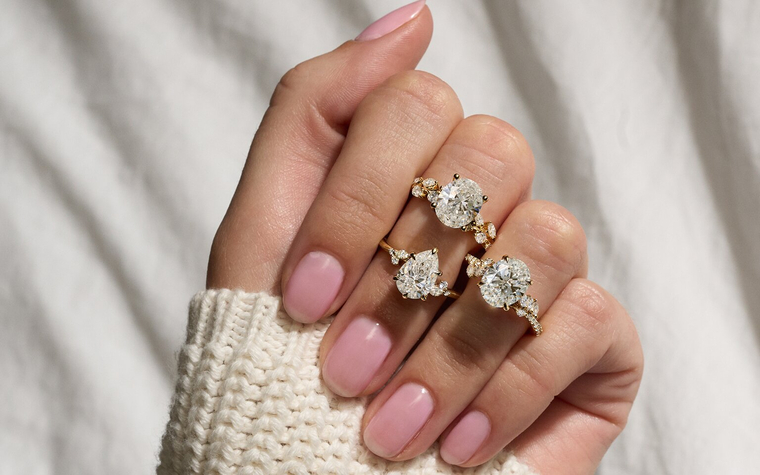
- Sparkle: Diamonds reflect bright white light, known as brilliance, and produce rainbow-colored flashes, called fire. The combination of brilliance, fire, and scintillation creates their distinctive sparkle. Diamond simulants can also reflect light, but their optical properties and visual effects differ.
- Facet Edges: Diamonds typically have sharp, well-defined facet edges that reflect the precision of their cutting and polishing. These edges can be examined under magnification, although their appearance alone cannot confirm authenticity.
- Inclusions: Many diamonds contain tiny internal characteristics, called inclusions, that can be examined under magnification. These are often microscopic and have no noticeable effect on the diamond's appearance. Because both genuine diamonds and simulants can contain internal characteristics, inclusions alone aren't proof of authenticity.
- Setting Quality: Diamonds are often mounted in precious metals, such as gold or platinum, with secure prongs or bezels. Hallmarks like 14K, 18K, or PT can help identify the setting metal, while the quality of the craftsmanship provides additional context when evaluating the jewelry.
These visual characteristics can offer helpful clues, particularly when comparing different gemstones. For a reliable determination of authenticity, our team recommends having the stone examined by a professional jeweler or gemologist.

How to Tell if a Diamond Is Real: At-Home Diamond Tests
At-home diamond tests can help you examine a stone's appearance and physical properties, but none can reliably confirm whether it's a real diamond. Some tests require a loose stone, while others can be performed on mounted jewelry. Use the methods below as preliminary observations rather than proof of authenticity.
At-Home Test | How to Perform It | What to Look For | Reliability & Limitations |
|---|---|---|---|
Flashlight Test | Place the diamond under a bright flashlight in a dimly lit room. Slowly rotate the stone or change the angle of the light to observe how it reflects. | Real diamonds typically produce bright white flashes (brilliance) and smaller rainbow-colored flashes (fire). | Not definitive. Diamond simulants can also reflect white and colored light, although their optical properties differ. |
Mirror Test | Position a mirror on a flat surface in a well-lit room. Hold the diamond in front of it and slowly rotate the stone while watching its reflections in the mirror. | Look for changing patterns of white and rainbow-colored light as the diamond moves. | Not definitive. Reflections in a mirror do not reveal a property unique to diamonds. |
Water Test | Fill a clear glass about three-quarters full with water. Carefully lower a loose stone into the glass and observe whether it floats or sinks. | A real diamond will sink to the bottom because it's denser than water. | Not definitive. Diamonds sink, but many simulants, including cubic zirconia and moissanite, also sink. Only suitable for loose stones. |
Black Light Test | In a darkened room, place the diamond on a stable surface and shine a UV black light directly onto it. Observe whether the stone emits a visible glow while the light is on. | Some diamonds fluoresce under UV light, most commonly producing a blue glow. Others show different colors or no fluorescence at all. | Not definitive. Some diamonds fluoresce, but others do not. Fluorescence also occurs in other gemstones. |
Sunlight Test | Hold the diamond securely near a window or outdoors in direct sunlight. Slowly change its angle and observe how the light reflects from different facets. | A well-cut diamond may show bright white reflections and rainbow-colored flashes as it moves. | Not definitive. Sparkle varies with cut quality, cleanliness, and lighting, and other gemstones can produce similar effects. |
Setting Test | Examine the inside of a ring band or the clasp of a necklace or bracelet for small engraved markings. If needed, use a magnifying glass to look for stamps such as 14K, 18K, 585, 750, or PT. | These markings can indicate that the jewelry is made from gold or platinum, metals commonly used in diamond settings. | Not definitive. Precious-metal markings identify characteristics of the setting rather than the gemstone itself. |
Fog Test | Hold the stone securely near your mouth and breathe gently onto its surface, as you would when fogging a mirror. Watch how quickly the condensation disappears. | Fog may dissipate quickly from a diamond because diamonds conduct heat efficiently. | Not definitive. Results can be affected by temperature, humidity, and other conditions. |
Dot Test | Draw a small black dot on white paper. Place a loose diamond upside down over the dot, with its flat table facet against the paper. Look down through the pointed side of the stone. | The diamond's refraction may make the dot difficult to see clearly or distort its appearance. | Not definitive. Results depend on the stone's cut, proportions, and viewing angle. Only suitable for loose stones. |
How to Tell if a Diamond Is Real: Professional Diamond Tests
Professional authentication is a well-established process. Professional jewelers and gemologists use specialized equipment and established testing methods to identify real diamonds and distinguish them from simulants.
The appropriate method depends on whether you're confirming that a gemstone is a diamond or determining whether it's natural or lab created.
Professional Test | How It Works | What It Can Tell You | Reliability & Limitations |
|---|---|---|---|
Gemological Laboratory Examination | A gemological laboratory uses specialized instruments and standardized procedures to examine the stone. Depending on the service, it may issue a report documenting the diamond's identity, origin, quality characteristics, and relevant treatments. | Can confirm whether a gemstone is a diamond and, with appropriate analysis, whether it's natural or lab created. | Most comprehensive. Independent laboratory analysis provides authoritative identification, with findings determined by the scope of the examination. |
Diamond Tester | A jeweler places the tip of an electronic testing device against the gemstone. The instrument measures thermal conductivity, and some models also measure electrical conductivity, to help identify the material. | Can distinguish diamonds from many common simulants. More advanced testers can also help distinguish moissanite from diamond. | Highly useful for professional screening. Basic thermal testers may identify moissanite as diamond and cannot determine natural versus lab origin. |
Loupe Examination | A trained jeweler examines the stone through a magnifying loupe, typically at 10x magnification. They inspect its facets, inclusions, surface characteristics, and other identifying features. | Can reveal characteristics that help identify gemstones and determine whether additional testing is appropriate. | Useful supporting examination. A loupe provides valuable information when used by an experienced professional, but it isn't sufficient for definitive identification on its own. |
Weight Test | A gemologist weighs a loose stone using a precision scale and compares its measurements with the expected dimensions and weight of a diamond. | Can reveal density differences that suggest a different gemstone material. For example, cubic zirconia weighs more than diamond at the same physical size. | Useful supporting examination. Weight comparisons help narrow down gemstone identity but are not definitive on their own. |
FAQ
How do you tell if a diamond is real with a flashlight?
To tell if a diamond is real with a flashlight, shine the light directly at the stone and observe its reflections as you slowly rotate it. Genuine diamonds produce bright white reflections and flashes of rainbow-colored light. However, other gemstones can create similar effects, so the flashlight test cannot confirm authenticity.
What does a real diamond look like in sunlight?
A real diamond typically displays bright white reflections and rainbow-colored flashes in sunlight. Its appearance depends on cut quality, cleanliness, and lighting conditions. Although these effects are characteristic of diamonds, they aren't exclusive to them.
How do you tell if a diamond ring is real?
To tell if a diamond ring is real, have the center stone examined with professional diamond testing equipment. You can also inspect its sparkle, facet edges, and setting quality for preliminary clues. Professional assessment is the most reliable way to verify the gemstone.
What are 10 ways to identify a real diamond?
Ten methods used to examine or identify diamonds include:
- Flashlight test
- Mirror test
- Water test
- Black light test
- Sunlight test
- Setting inspection
- Fog test
- Dot test
- Professional diamond tester
- Gemological laboratory examination
The first eight methods provide preliminary clues, while professional testing offers more reliable identification.
How do you tell if a diamond is real with water?
To tell if a diamond is real with water, place a loose stone in a glass of water and observe whether it sinks. Genuine diamonds sink because they're denser than water. However, many simulants also sink, so this test cannot confirm authenticity.
How can you tell a real diamond from a fake?
You can reliably distinguish a real diamond from a simulant through professional gemstone testing. Diamonds have different chemical, physical, and optical properties from materials such as cubic zirconia, which gemologists can identify using specialized instruments. Both natural and lab diamonds are real diamonds.
What does a real diamond look like?
A real diamond typically has sharp, well-defined facets and produces bright white reflections alongside rainbow-colored flashes. Its appearance varies depending on its shape, cut, and lighting conditions. Because simulants can resemble diamonds, visual characteristics alone cannot establish authenticity.
How can you tell if a diamond is real with a mirror?
To tell if a diamond is real with a mirror, hold the stone in front of the mirror under a light source and slowly rotate it to observe its reflections. Genuine diamonds can produce bright flashes of white and colored light, but the mirror test cannot reliably distinguish them from other gemstones.
How can you test a diamond without a tester?
You can examine a diamond without a tester by observing its sparkle, checking its setting, or using household methods such as the flashlight, fog, or dot test. These methods can provide preliminary clues but cannot confirm authenticity. For reliable identification, have the gemstone examined by a professional jeweler or gemologist.

USE CODE BLACKFRIDAY IN CART.