



November Birthstone | Description | History | Meaning & Symbolism | Color | Hardness | Care |
|---|---|---|---|---|---|---|
Topaz | Traditional November birthstone; prized for its warm, golden-yellow color. | A rich history dating back thousands of years; ancient Greeks believed it could increase strength, and in the Middle Ages it was thought to heal ailments. | Love, affection, and friendship; believed to promote joy, generosity, and peaceful communication. | Wide range of colors; most associated with golden-yellow, but also blue, orange, pink, and white. | 8 Mohs; relatively durable and suitable for everyday wear with care. | Clean with warm, soapy water and a soft brush. Avoid ultrasonic and steam cleaners, and store separately. |
Citrine | Modern November birthstone; a variety of quartz known for its sunny color. | Popularized in ancient Greece as a decorative gem; regained popularity during the Art Deco period of the 1920s and 1930s. | Known as the "Merchant's Stone"; associated with wealth, prosperity, positivity, and creativity. | Yellow to golden-orange, with the most prized stones showing a deep, honeyed hue. | 7 Mohs with good toughness; durable and well suited to everyday wear. | Clean with warm, soapy water and a soft cloth or brush. Ultrasonic cleaning is generally safe; avoid steam and store separately. |
Popular November Birthstone Jewelry


Topaz Birthstone
Topaz is the traditional November birthstone. It is renowned for its remarkable range of colors, though the warm, golden-yellow variety is the shade most closely associated with November. With a history spanning thousands of years, topaz has long been valued for both its beauty and its symbolism.
History of the Topaz Birthstone
The name "topaz" is believed to derive from the Sanskrit word "tapas," meaning fire, or from the Greek island of Topazios (now called Zabargad) in the Red Sea, where the stone was historically mined.
Throughout history, topaz has been associated with various mystical and healing properties. Ancient Greeks believed topaz could increase strength and make its wearer invisible in emergencies, and during the Middle Ages it was thought to heal physical and mental ailments and prevent death.
Topaz Birthstone Meaning & Symbolism
Topaz is believed to enhance one's sweetness and disposition, promoting joy, generosity, and good health. The stone is also linked to peaceful communication and emotional expression, helping to establish deeper and more meaningful friendships.
Topaz Birthstone Color
The color most associated with November's topaz is a rich, golden-yellow. However, topaz can also be found in shades of blue, orange, pink, and even white. Golden-yellow topaz, often referred to as Imperial Topaz, is particularly valued and sought-after for its warm, stunning appearance.
Topaz Birthstone Hardness
Topaz scores an 8 on the Mohs hardness scale, making it a relatively durable birthstone suitable for everyday wear. However, it should be handled with care, as it can be prone to chipping and cracking if struck with force.
Topaz Birthstone Care
To clean topaz, use warm, soapy water and a soft brush. Avoid ultrasonic cleaners and steam cleaning, as the stone's internal structure can be sensitive to high temperatures. Store topaz jewelry separately from other gemstones to prevent scratching and potential damage.

Citrine Birthstone
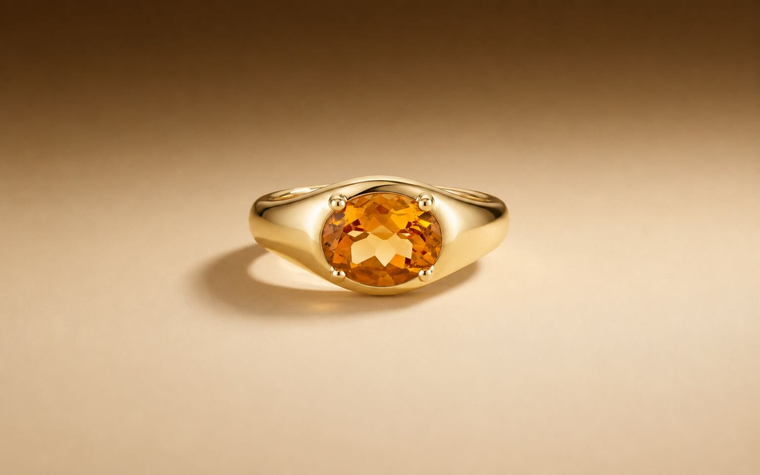
Citrine is the modern November birthstone. A variety of quartz named for its sunny color, citrine is known for its yellow to golden-orange hues and its warm, inviting glow. It is among the most affordable and desired yellow gemstones available today.
History of the Citrine Birthstone
Citrine was popularized in ancient Greece, where it was used as a decorative gem. Its sunny color made it a favorite among the Greeks and Romans, who believed it had the power to protect against evil thoughts and snake venom. In more recent history, citrine gained popularity during the Art Deco period of the 1920s and 1930s and was often featured in stunning pieces of jewelry.
Citrine Birthstone Meaning & Symbolism
Citrine is known as "the Merchant's Stone" for its reputed ability to attract wealth and prosperity. It is believed to carry the power of the sun, offering energy and warmth to those who wear it. Citrine is said to promote positivity, dispel negative energies, and encourage creativity and clarity of thought, making it an excellent stone for those in need of a boost in confidence.
Citrine Birthstone Color
Named after the French word for lemon, "citron," citrine is known for its yellow to golden-orange color. The most prized citrine stones exhibit a deep, honeyed hue, reminiscent of a sunset.
Citrine Birthstone Hardness
Citrine ranks 7 on the Mohs hardness scale with good toughness, indicating solid durability for regular use and care. Citrine is less likely to scratch but should still be protected from hard knocks and rough handling.
Citrine Birthstone Care
Citrine can be cleaned using warm, soapy water and a soft cloth or brush. It is generally safe to use ultrasonic cleaners, but steam cleaning should be avoided. Like topaz, citrine should be stored separately to prevent scratches and damage from harder gemstones.


WITH PURCHASE OVER $1,000.
USE CODE TENNIS IN CART.