


How Much Is a 3 Carat Diamond Ring?
A 3-carat natural diamond ring may cost $11,150 to $103,150, while a 3-carat lab grown diamond ring may cost $2,650 to $35,650. Both estimates combine a 3-carat center diamond with a $650 baseline for a simple 1.5 mm solid-metal solitaire setting.
Ring Type | Estimated 3 carat diamond price | Baseline setting | Estimated ring price |
|---|---|---|---|
Natural diamond ring | $10,500 to $102,500 | $650 | $11,150 to $103,150 |
Lab grown diamond ring | $2,000 to $35,000 | $650 | $2,650 to $35,650 |
Our diamond price guide estimates that a 3-carat natural diamond can cost between $10,500 and $102,500. Our lab grown diamond price guide places a 3-carat lab grown diamond between $2,000 and $35,000. These are general estimates across the quality spectrum.
The range expands at 3 carats because larger natural diamonds are less common, and quality differences become easier to see. Cut, color, clarity, shape, and proportions can each have a significant effect on appearance and price.
Taxes, insurance, engraving, custom work, and more detailed settings are not included in this estimation. The $650 setting is a pricing baseline. Actual cost and compatibility may vary based on the diamond’s shape and the setting’s construction. In this guide, “3 carat” refers to the center diamond rather than the combined weight of every diamond in the ring.
Where to Start
A 3-carat diamond has a larger face-up area, which can make its proportions, color, and inclusions more noticeable. Balanced grades matter, but you still do not need to start at the top of every scale.
A practical baseline is:
- Cut: Very Good or higher. Cut affects how effectively the diamond returns light. Strong proportions help a 3-carat diamond look bright and balanced instead of carrying excess weight where it cannot be seen.
- Clarity: VS2 or higher. A VS2 diamond may look clean without magnification, but the type and location of its inclusions matter. Review the individual stone to confirm that its characteristics are not noticeable during normal viewing.
- Color: G is a common starting point, but the final choice is personal. Shape, setting metal, and color sensitivity all affect what you see. Yellow and rose gold can complement a warmer appearance, while white gold and platinum create more contrast.
These recommendations create a useful starting point without requiring premium grades in every category. Diamonds outside these guidelines can still be a good choice. The goal is to protect brightness, confirm that the stone looks clean, and choose color based on the finished ring rather than the grading report alone.

What Affects the Price of a 3 Carat Diamond Ring?
Three carats tell you the diamond’s weight, but not what it will look like or where it will fall within the price range. These factors explain most of the difference:
- Natural or lab grown origin: This is usually the largest price distinction. Larger jewelry-quality natural diamonds are less common, and natural diamond prices rise quickly as carat weight increases. Lab grown diamonds can be produced to meet demand more readily, which generally results in lower prices. Our guide to why diamonds are so expensive explains the supply and production factors behind natural diamond pricing.
- Cut and proportions: Two diamonds can both weigh 3 carats but have different face-up dimensions. A diamond that carries too much weight in its depth may look smaller from above. Cut also determines how effectively the stone reflects light.
- Color and clarity: Higher grades generally cost more. Because a 3-carat diamond shows more detail, warmth and inclusions may be easier to see than they are in a smaller stone. Their visibility still depends on shape, faceting, setting metal, and inclusion placement.
- Diamond shape: Round diamonds often carry a premium because of demand and the amount of rough material removed during cutting. Elongated shapes such as oval, pear, marquise, and emerald may provide more visible finger coverage at the same weight.
- Exact carat weight: The 3.00 carat mark is a major pricing threshold. A diamond slightly below it may look similar once set but cost less, particularly when the face-up measurements are close.
- Setting design: A simple solitaire generally costs less than a halo, pavé, three-stone, or custom setting. With a 3-carat center diamond, the head, prongs, band, and overall construction should also provide appropriate support. Our engagement ring customization guide covers the design decisions that shape the finished ring.

How to Get More for Your Budget
At 3 carats, small changes in specifications can lead to large price differences. Focus first on the qualities that affect what you see and how the ring wears.
- Compare diamonds just below 3 carats. A diamond between roughly 2.75 and 2.99 carats may provide a similar face-up look without the full premium attached to the 3.00 carat threshold.
- Protect cut quality. Strong cut and proportions help the diamond use its weight effectively. A higher color or clarity grade will not make up for a stone that looks dull or smaller than expected face up.
- Inspect clarity closely. Do not rely on the VS2 label alone. Compare magnified images or videos and note where each inclusion sits. A discreet inclusion near the edge may be less noticeable than one beneath the center of the diamond.
- Use shape to change finger coverage. Oval, pear, marquise, and emerald shapes tend to create more visible length than round or square diamonds of the same weight. Compare actual dimensions rather than assuming every 3-carat diamond will look the same.
- Coordinate color with the setting. A slightly warmer diamond may pair well with yellow or rose gold. White metals create stronger contrast, which can make color differences more apparent.
- Choose natural or lab grown early. The decision has a major effect on the amount available for cut, color, clarity, and setting. Lab grown may leave more room for higher grades or custom details, while natural may better suit shoppers who prioritize rarity and natural formation.
- Keep the setting proportional. A thin band or minimal prongs can emphasize the center diamond, but the setting still needs to support the stone securely. Our guides to settings that make diamonds look bigger and how to make a diamond look bigger explain how band width, height, halos, and surrounding details affect visual size.
- Consider daily wear. A 3-carat diamond has a substantial presence and may sit higher or feel more prominent on the hand. Setting height, prongs, comfort, and lifestyle should be considered alongside appearance. Our guide to what to look for in an engagement ring provides a broader framework for evaluating the complete ring.
- Set a complete ring budget. Include the center stone, setting, taxes, insurance, and optional services before comparing diamonds. The right budget should fit your broader financial priorities rather than an industry rule or average. See our guide to how much to spend on an engagement ring for more budgeting considerations.

The Bottom Line
A 3-carat diamond ring can vary widely in price because origin, rarity, quality, and proportions all matter. The setting also adds cost based on its metal, construction, accent gemstones, and design details.
Using a $650 simple 1.5 mm solitaire setting as a baseline:
- A 3-carat natural diamond ring may cost $11,150 to $103,150.
- A 3-carat lab grown diamond ring may cost $2,650 to $35,650.
- A practical starting point is Very Good cut or higher and VS2 clarity or higher.
- Choose color based on the diamond shape, setting metal, and preferred appearance. G is a common place to start.
At this size, balanced grades often provide more value than pushing every specification to the top of its scale. Compare how each diamond performs, how large it looks from above, and whether its color or inclusions are visible to you. The grading report should support the decision, not make it for you.
FAQ
Is a 3-carat diamond good for an engagement ring?
Yes. A 3-carat diamond creates a statement-sized center stone with substantial visual presence. It can work in a simple solitaire, a three-stone design, a halo, or a more detailed setting.
Three carats are larger than the average engagement ring center stone of around 1.5 carats. Whether it feels right depends on finger size, setting style, comfort, lifestyle, budget, and personal preference. Our guide to how many carats an engagement ring should be explores those considerations in more detail.
How big is a 3-carat diamond ring?
A 3 carat round diamond typically measures about 9.3 mm across, although the exact diameter depends on its cut and proportions. A diamond with more weight in its depth may look smaller from above.
Other shapes have different dimensions. Oval, pear, marquise, and emerald diamonds often create more visible length and finger coverage than a round diamond of the same weight.
Is a four-prong or six-prong setting better for a 3-carat diamond ring?
Neither is universally better. Four prongs expose more of the diamond and can make its outline look more open. Six prongs place metal around more points of the stone and may provide additional security.
The best configuration depends on the diamond shape, measurements, setting design, and the wearer’s priorities. Prong number and placement affect both visibility and security.
How much is a 3-carat solitaire diamond ring?
Using the $650 no-accent setting in this guide, a 3-carat solitaire ring is estimated to cost:
- Natural diamond solitaire: $11,150 to $103,150
- Lab grown diamond solitaire: $2,650 to $35,650
A solitaire is generally one of the lower-cost setting styles because it does not include a halo, side stones, or diamonds along the band. Most of the total price comes from the 3-carat center diamond.
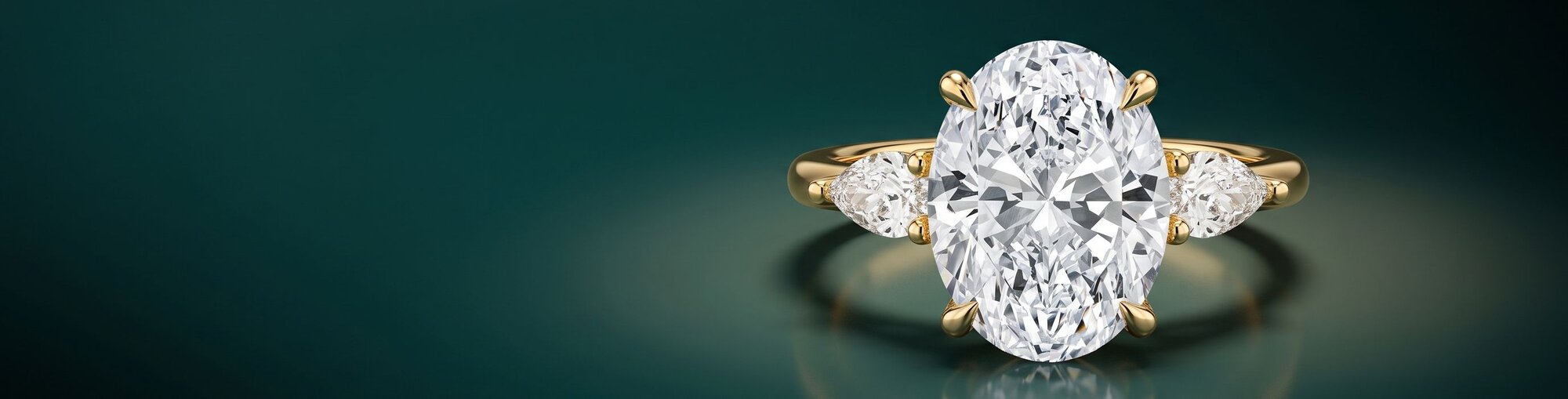
How much is a 3-carat oval engagement ring?
A 3-carat oval engagement ring can fall within the same broad totals used throughout this guide:
- Natural 3 carat oval ring: Approximately $11,150 to $103,150 with the baseline setting
- Lab grown 3 carat oval ring: Approximately $2,650 to $35,650 with the baseline setting
The actual price depends on the oval diamond’s cut, color, clarity, proportions, length-to-width ratio, and availability. Oval diamonds often provide more face-up length than round diamonds of the same carat weight.
Does adding accent stones increase the price of a 3-carat diamond ring?
Yes. Accent stones add diamond weight, materials, and setting labor. The increase depends on the number and quality of the stones and the complexity of the design.
A hidden halo may add less than a three-stone setting or a band with extensive pavé. Accent stones also increase the ring’s overall width and sparkle, although a 3-carat center diamond already provides significant visual presence.
Is a lab grown 3 carat diamond ring cheaper than a 3-carat natural diamond ring?
Generally, yes. A 3-carat lab grown diamond is estimated to cost $2,000 to $35,000, compared with $10,500 to $102,500 for a 3 carat natural diamond. With the same $650 baseline setting, the estimated totals become $2,650 to $35,650 for lab grown and $11,150 to $103,150 for natural.
Lab grown diamonds usually cost less because production can scale more readily than the supply of large jewelry-quality natural diamonds. Both are diamonds with the same chemical, physical, and optical properties. The primary distinction is origin.
What quality grades should I choose for a 3 carat diamond ring?
A practical starting point for a 3-carat diamond ring is:
- Cut: Very Good or higher
- Clarity: VS2 or higher
- Color: G is a common starting point, but the final choice should reflect personal preference, diamond shape, and setting metal.
At 3 carats, color and inclusions may be easier to notice because the diamond shows more detail. Review the actual stone alongside its grading report, paying particular attention to proportions and inclusion placement.
Emerald and Asscher shapes may require closer attention to clarity and color because their broad step-cut facets make internal characteristics easier to see. Brilliant-cut shapes such as round, oval, and cushion tend to disguise those details more effectively.

WITH PURCHASE OVER $1,000.
Applies to a future purchase
of $250 or more.
USE CODE GIFT IN CART.