





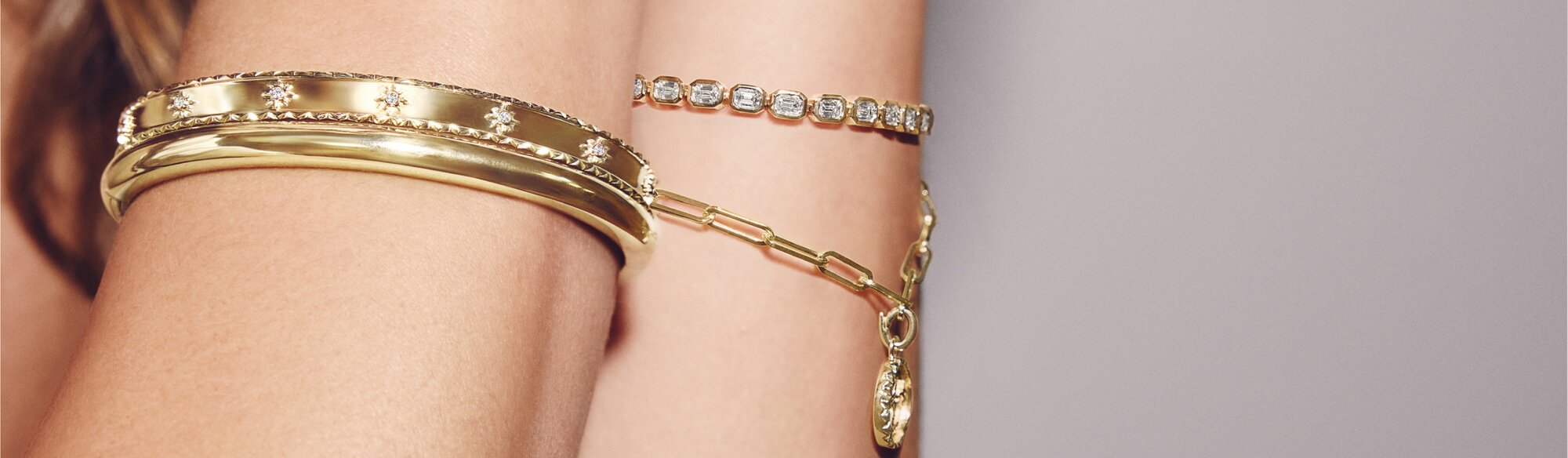
How to Stack Bracelets
A successful bracelet stack is more than simply wearing several bracelets together. The strongest combinations consider visual hierarchy, proportion, contrast, and how each piece moves on the wrist. Here's how to create a balanced bracelet stack in four steps.
1. Choose a Focal Bracelet
Start with the bracelet you want the eye to notice first. This could be a tennis bracelet, statement bangle, cuff, chain bracelet, or watch.
The focal bracelet does not need to be the widest or most substantial piece. A distinctive gemstone, unusual link design, color, or texture can also draw attention.
Use this piece as your starting point, then select complementary bracelets that add contrast or reinforce its design without competing for attention.

2. Create Contrast with Different Bracelet Styles
Combining bracelets with different widths, textures, styles, and metals creates visual interest and helps individual pieces stand out. The key is to introduce contrast while repeating at least one element to keep the stack cohesive.
Consider these styling approaches:
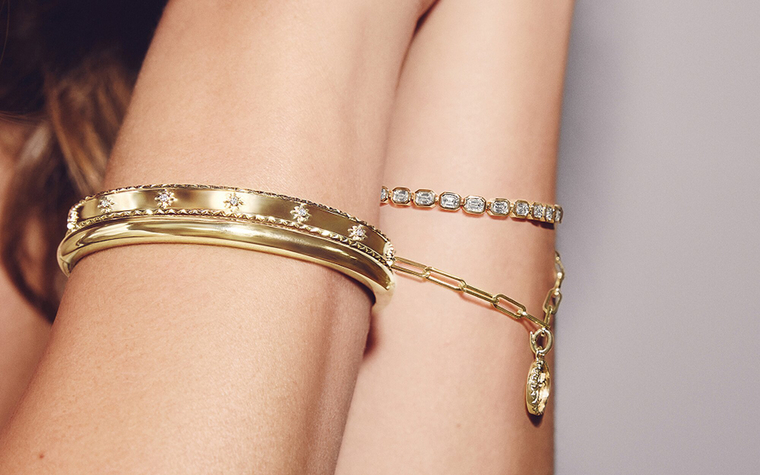
- Vary Width and Visual Weight: Pair a substantial cuff or chunky link bracelet with one or two delicate chains. Visual weight depends on more than size, as color, texture, and sparkle can also draw attention.
- Mix Textures: Combine smooth, polished bangles with textured chains, beaded bracelets, or engraved designs.
- Combine Styles: Layer a classic tennis bracelet with a modern paperclip chain or structured cuff to balance sparkle with simpler designs.
- Mix Metals: Combine yellow gold, white gold, rose gold, or silver. Repeat one metal throughout the stack or introduce a two-tone bracelet to connect the colors.
- Add Gemstones: Introduce a colored gemstone bracelet alongside simpler metal designs to create an additional point of interest.
You don't need to introduce contrast in every category. A combination of different textures in the same metal can feel just as intentional as a mixed-metal stack.
Our jewelry specialists recommend evaluating the combined visual weight of the stack rather than judging each bracelet individually. Several delicate bracelets can create just as much visual presence as one substantial cuff.

3. Consider Symmetry or Asymmetry
Symmetrical and asymmetrical bracelet stacks create different visual effects.
- Symmetrical Stacking: Combine bracelets with similar widths, styles, or finishes for a coordinated appearance. For example, pair a tennis bracelet with two matching bangles.
- Asymmetrical Stacking: Mix bracelets with different widths, textures, or styles for a more relaxed look. For example, combine a substantial cuff with a delicate chain bracelet.
Unlike rings, bracelets naturally shift position as you move your wrist. Rather than trying to maintain an exact arrangement throughout the day, focus on a combination that looks balanced even when the pieces move.

4. Check Fit, Movement, and Comfort
The final step is to evaluate how the bracelets look and feel together. Bracelets can slide, rotate, and overlap throughout the day, making movement an important part of the styling process.
Before finalizing your stack, check the following:
- Fit: Each bracelet should sit comfortably without feeling too tight or sliding excessively along your wrist.
- Movement: Move your wrist and arm naturally to see whether the bracelets shift comfortably or become tangled.
- Spacing: Make sure delicate chains and gemstone settings have enough room to move without repeatedly catching on neighboring pieces.
- Comfort: Check that clasps, charms, and rigid designs do not pinch, press against your wrist, or interfere with everyday activities.
- Overall Balance: Look at the full stack from different angles to see whether the pieces remain visually cohesive.
Pay particular attention to combinations that bring hard metal edges into contact with delicate chains or gemstone settings. Repeated friction can contribute to wear, so some bracelets may be better worn separately.
The best bracelet stacks balance style with practicality. A combination should look intentional while still feeling comfortable throughout the day.

Styling Tips
Once you've established the structure of your stack, a few additional styling choices can help refine the look.
- Start with Two or Three Bracelets: A smaller combination makes it easier to experiment with proportion and contrast. Add more pieces if they contribute something different to the overall look.
- Consider Smartwatch Functionality: If a smartwatch is part of your stack, choose bracelets that do not obstruct buttons, interfere with sensors, or prevent the watch from sitting securely against your wrist.
- Coordinate with Your Outfit: Delicate bracelets can complement more detailed clothing, while substantial cuffs or layered chains can add interest to simpler outfits. Consider sleeve length and how much of the stack will remain visible.
- Pay Attention to Tangling: Fine chains with similar lengths may twist together as you move. Try combining different bracelet structures or adjusting their fit to limit excessive overlapping.
- Consider Your Daily Activities: Rigid bangles, dangling charms, and loose chains may interfere with typing or other activities. Adjust your stack based on how you plan to wear it.
The most successful bracelet stacks balance contrast, repetition, and proportion without sacrificing comfort. Use these principles as a starting point, then adjust the combination to suit your personal style.

WITH PURCHASE OVER $1,000.
USE CODE FREEGIFT IN CART.*