


Key Differences Between Morganite and Moissanite
The key differences between morganite and moissanite are their composition, color, brilliance, durability, and price.
- Origin and Composition: Morganite is a natural gemstone and a member of the beryl family. Moissanite is a lab-created gemstone composed of silicon carbide.
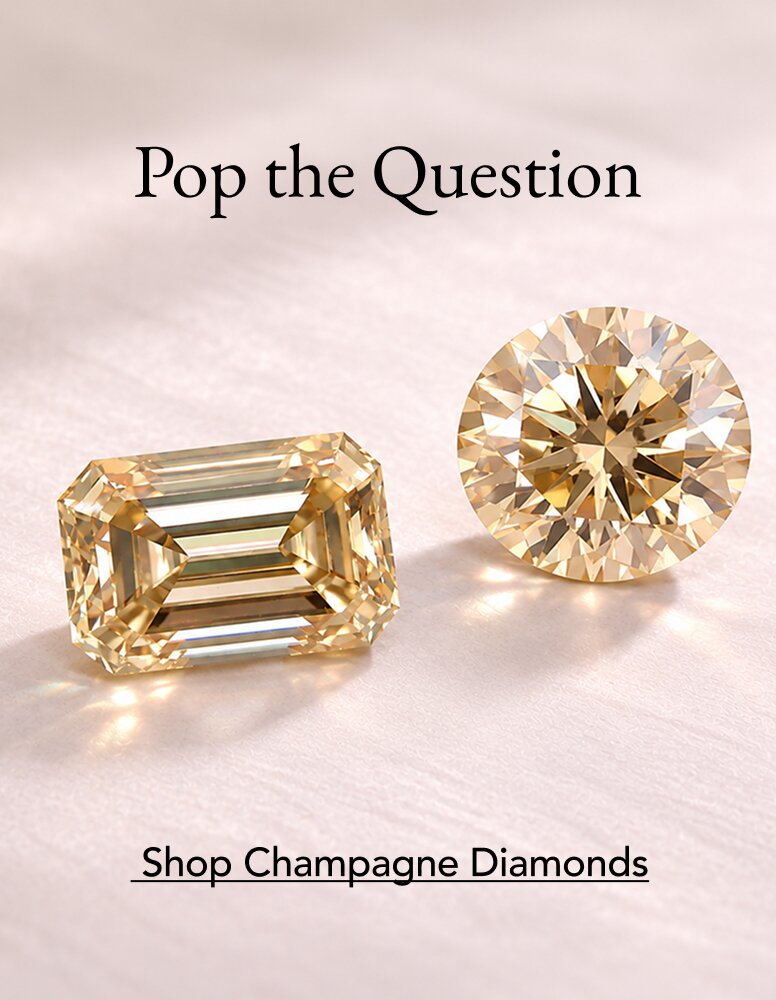
- Color: Morganite is known for its natural pink and peach tones. Moissanite is typically colorless or near colorless, although fancy-colored varieties are also available.
- Brilliance: Moissanite reflects more light and produces a bright, rainbow-like sparkle. Morganite has a softer, more understated glow.
- Durability: Moissanite measures 9.25 on the Mohs scale, compared with 7.5–8 for morganite. This makes moissanite more resistant to scratching and better suited to frequent wear.
- Price: Morganite is generally more affordable than moissanite, although the final price of either gemstone depends on factors such as size and quality.

Morganite vs. Moissanite: Which Is Better?
Neither morganite nor moissanite is inherently better, and their differences make the choice less about which gemstone is universally better and more about which characteristics matter most to you.
To choose between the two options, it’s important to decide whether you prioritize natural color and affordability or greater durability and brilliance.
Morganite may be the better choice if you:
- Prefer a natural gemstone.
- Want soft pink or peach color.
- Prefer a more subtle glow.
- Prioritize a generally lower gemstone price.
Moissanite may be the better choice if you:
- Prioritize durability for frequent wear.
- Prefer strong brilliance and colorful fire.
- Want a gemstone that is typically colorless or near colorless.
- Prefer a harder gemstone that is more resistant to scratching.
For an engagement ring, lifestyle can be especially important. Moissanite's greater hardness makes it well suited to daily wear, while morganite can also be worn regularly, but with more careful handling.

FAQ
Is morganite, moissanite, or diamond best for an engagement ring?
The best choice between morganite, moissanite, and diamond depends on your priorities. Morganite offers natural pink and peach color, moissanite offers strong brilliance and durability, and diamond is the traditional choice with the greatest hardness of the three.
Morganite may appeal to someone who prioritizes natural color, while moissanite can be a strong choice for those focused on sparkle and durability. Diamonds remain the classic option for customers who prefer a traditional diamond engagement ring.
What is the difference between pink moissanite and morganite?
Pink moissanite and morganite are different gemstones, even when they have a similar pink appearance. Morganite is a natural beryl gemstone known for its pink and peach tones, while moissanite is composed of silicon carbide and has different optical and durability characteristics.
Moissanite is harder and produces stronger brilliance and rainbow-like fire. Morganite has a softer glow and is valued for its naturally occurring pink-to-peach color.
Is morganite more expensive than moissanite?
Morganite is generally more affordable than moissanite. However, the price of either gemstone can vary depending on its size and quality, so individual stones may not always follow the same price relationship.
Is morganite better than moissanite?
Neither morganite nor moissanite is universally better. Morganite may be preferable if you value natural origin, pink or peach color, and affordability, while moissanite may be preferable if you prioritize greater durability and stronger brilliance.

WITH PURCHASE OVER $1,000.
USE CODE STUDS IN CART.*