



What Is Moissanite?
Moissanite is a gemstone made of silicon carbide, a compound of silicon and carbon. Known for its exceptional brilliance, colorful sparkle, and durability, it's a popular alternative to diamonds, particularly in engagement rings.
Moissanite has a unique history. In 1893, French chemist Henri Moissan discovered tiny crystals inside a meteorite in Canyon Diablo, Arizona. He initially believed they were diamonds, but later identified them as silicon carbide. The mineral was eventually named moissanite in his honor.
Natural moissanite is extremely rare. Although it has been discovered in meteorites and certain geological formations, nearly all moissanite used in jewelry today is created in laboratories. This makes it possible to produce high-quality gemstones without relying on naturally occurring deposits.
Today, moissanite is available in a variety of shapes, sizes, and colors, making it a versatile choice for engagement rings and fine jewelry.
In Summary: Moissanite is a genuine gemstone composed of silicon carbide. Although it occurs naturally, the moissanite used in jewelry today is lab created because natural moissanite is exceptionally rare.

Is Moissanite a Diamond?
No, moissanite is not a diamond. Although the two gemstones can look similar, they have different chemical compositions and physical properties. Diamonds consist of crystallized carbon, while moissanite is made of silicon carbide.
One of the most noticeable differences is how they interact with light. Both gemstones produce brilliance and colorful flashes, but moissanite has a higher refractive index and produces more rainbow-colored fire than diamond.
Diamonds are also slightly harder, ranking 10 on the Mohs hardness scale compared to moissanite's 9.25. Both are exceptionally durable and suitable for everyday jewelry.
It's also important to distinguish moissanite from lab diamonds. Lab diamonds are real diamonds with the same composition and properties as natural diamonds. Moissanite is a separate gemstone, regardless of whether it occurs naturally or is created in a laboratory.
In Summary: Moissanite and diamond may look alike, but they are different gemstones. Moissanite is known for its colorful fire, while diamonds have their own distinctive sparkle and slightly greater hardness.

Is Moissanite Real?
Yes, moissanite is a real gemstone. It has its own chemical composition, crystal structure, and optical properties, which distinguish it from diamond and other gemstones.
Moissanite occurs naturally, although it is exceptionally rare. The moissanite used in jewelry is created in laboratories, where specialized technology produces the same silicon carbide crystal structure found in natural moissanite.
Lab creation doesn't make moissanite an imitation gemstone. While it's sometimes described as a diamond alternative or simulant because of its similar appearance, moissanite is a distinct gemstone with desirable qualities of its own.
In Summary: Moissanite is a genuine gemstone, not a fake diamond. Its laboratory origin doesn't change its identity or the physical properties that make it suitable for fine jewelry.

Diamond vs. Moissanite: Side-by-Side Comparison
Moissanite and diamond share several desirable characteristics, including brilliance, durability, and suitability for engagement rings. However, their different compositions influence how they sparkle, how they are graded, and how much they cost.
The chart below compares their key characteristics.
Characteristic | Moissanite | Diamond |
|---|---|---|
Composition | Silicon carbide (SiC) | Crystallized carbon |
Origin | Nearly all jewelry-quality moissanite is lab created because natural moissanite is extremely rare | Natural diamonds form within the Earth, while lab diamonds are grown in controlled environments |
Hardness | 9.25 on the Mohs hardness scale | 10 on the Mohs hardness scale |
Durability | Highly resistant to scratching and suitable for everyday jewelry | Extremely resistant to scratching and suitable for everyday jewelry |
Brilliance & Sparkle | Exceptional brilliance with more intense rainbow-colored fire | Distinctive balance of white brilliance, rainbow-colored fire, and scintillation |
Refractive Index | Approximately 2.64–2.69 | Approximately 2.417–2.419 |
Color | Typically colorless or near colorless, with fancy-colored varieties also available | Colorless, near-colorless, and fancy-colored varieties |
Grading | Evaluated for characteristics such as cut, color, and clarity. Brilliant Earth offers Premium and Super Premium color categories | Evaluated using the 4 Cs: cut, color, clarity, and carat weight |
Price | Generally less expensive than natural and lab diamonds of comparable size | Natural diamonds are generally the most expensive, while lab diamonds typically cost less than natural diamonds |
Sourcing | Created in laboratories without traditional gemstone mining | Natural diamonds are mined, while lab diamonds are created in controlled environments |
Longevity | Can last a lifetime with proper care | Can last a lifetime with proper care |
What Is the Difference Between Moissanite and Diamond?
The primary differences between moissanite and diamond are their composition, sparkle, hardness, price, and grading. Both are beautiful, durable gemstones, but each has distinct characteristics.
- Composition: Diamonds are made of carbon, while moissanite is composed of silicon carbide. This difference in crystal structure is responsible for their different optical and physical properties.
- Sparkle: Moissanite produces more rainbow-colored fire than diamond, creating colorful flashes that can become especially noticeable in larger stones. Diamonds have a distinctive balance of brilliance, fire, and scintillation, giving them a different visual appearance.
- Hardness: Diamonds rank 10 on the Mohs hardness scale, while moissanite ranks 9.25. Although diamond is harder, both gemstones are highly resistant to scratching and well suited for everyday wear.
- Price: Moissanite generally costs less than both natural and lab diamonds of comparable size. Natural diamonds typically command the highest prices because of their geological rarity, while lab diamonds offer another price point.
- Color & Grading: Diamonds are independently graded using the 4 Cs. Moissanite is evaluated differently, with Brilliant Earth categorizing its color as Premium or Super Premium rather than using traditional diamond letter grades.
- Origin: Natural diamonds form deep within the Earth over billions of years. Lab diamonds and jewelry-quality moissanite are created in controlled environments, although they are different gemstone materials.
At Brilliant Earth, our Premium moissanite is comparable in color to G–H diamonds, while Super Premium moissanite is comparable to D–F diamonds. These categories describe color appearance rather than suggesting moissanite and diamond use identical grading systems.
In Summary: Moissanite differs from diamond in composition, optical properties, hardness, price, and grading. Both offer exceptional sparkle and durability, but their distinct characteristics can influence which gemstone you prefer.

How to Tell Moissanite From Diamond
You may be able to distinguish moissanite from diamond by comparing their sparkle, particularly when viewing similarly sized gemstones side by side. Moissanite produces more intense rainbow-colored flashes, while diamond displays a different balance of white brilliance and fire.
A few characteristics can help identify the differences:
- Rainbow Fire: Moissanite displays more colorful flashes of light than diamond. This effect can become especially noticeable in larger stones and under bright lighting.
- Facet Doubling: Moissanite's optical properties can create a doubling effect when certain facet junctions are viewed under magnification. A trained gemologist can use this characteristic to help identify the gemstone.
- Professional Testing: Moissanite and diamond both conduct heat efficiently, so moissanite may register as diamond on some traditional thermal testers. More advanced instruments can distinguish them by evaluating additional properties.
Although visual comparison can offer clues, professional testing is the most reliable way to confirm whether a gemstone is moissanite or diamond. A professional jeweler or gemologist can use specialized equipment to identify the stone accurately.
In Summary: Moissanite often displays more rainbow-colored fire than diamond, but appearance alone isn't always enough to distinguish them. Professional gemstone testing provides the most reliable identification.

Is Moissanite Better Than Diamond?
Moissanite isn't universally better or worse than diamond. Both are durable, brilliant gemstones, and the right choice depends on your preferred sparkle, budget, and the characteristics you value most.
When deciding between them, consider the advantages of each:
Why Choose Moissanite?
- Colorful Sparkle: Moissanite produces exceptional fire, making it appealing if you enjoy pronounced rainbow-colored flashes.
- Budget Flexibility: Moissanite generally costs less than diamonds of comparable size, giving you more flexibility when choosing a gemstone.
- Everyday Durability: With a hardness of 9.25 on the Mohs scale, moissanite is highly resistant to scratching and suitable for engagement rings and everyday jewelry.
- Mining-Free Origin: Jewelry-quality moissanite is created in laboratories, making it an option for those who prefer a gemstone produced without traditional mining.
Why Choose Diamond?
- Distinctive Brilliance: Diamonds are known for their balance of white brilliance, fire, and scintillation. If you prefer this particular type of sparkle, diamond may be the better fit.
- Exceptional Hardness: Ranking 10 on the Mohs scale, diamond is the hardest naturally occurring mineral and offers outstanding resistance to scratching.
- Tradition & Origin: Diamonds have a long-standing association with engagement rings. Natural diamonds also offer geological rarity and history, which may carry personal significance.
- Natural & Lab Options: Diamonds are available in both natural and lab-created varieties, giving you additional choices in origin, rarity, and price.
We recommend comparing moissanite and diamond in person when possible. Their sparkle can look noticeably different under certain lighting conditions, and seeing them side by side can help you decide which appearance you prefer.
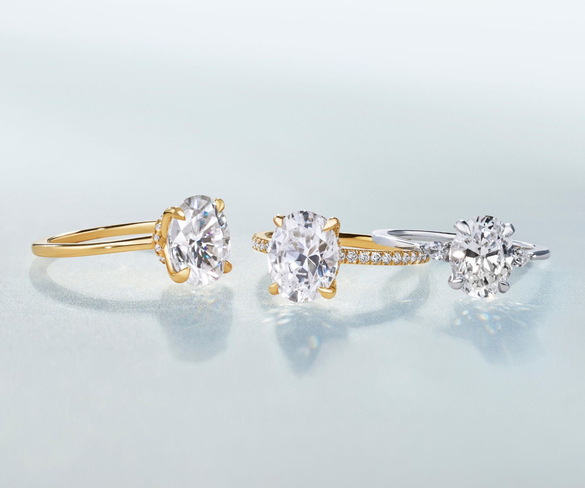
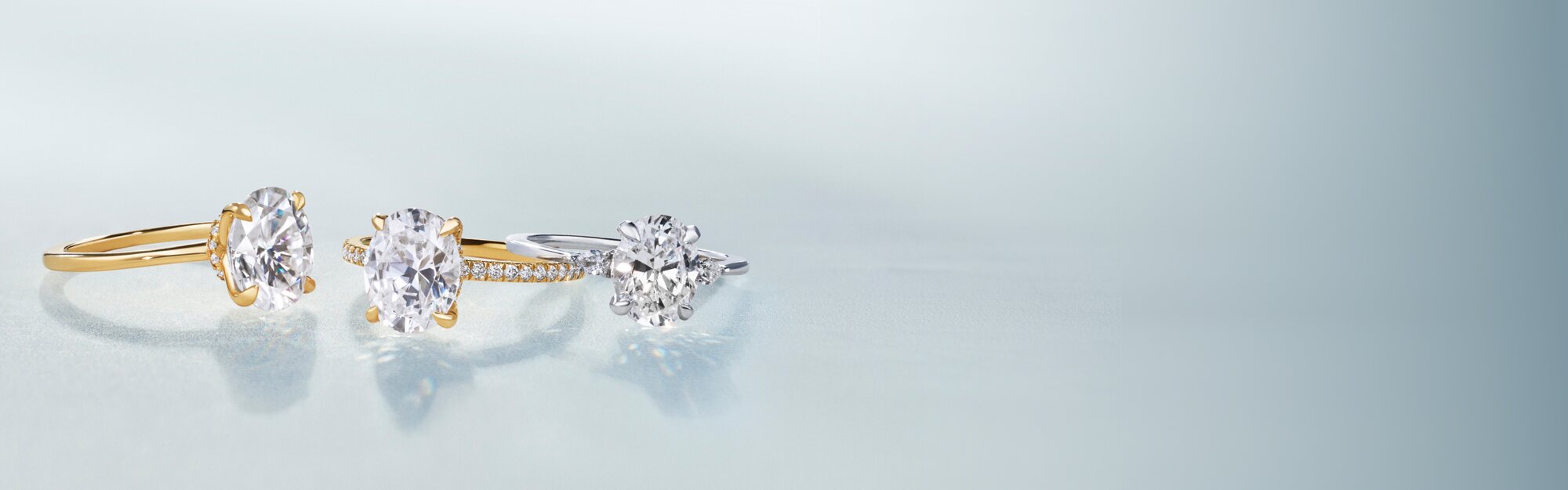
Most Popular Moissanite Rings
Explore our most popular settings to pair with a moissanite.


FAQ
What is a moissanite ring?
A moissanite ring is a ring featuring a moissanite gemstone, either as the center stone or as part of the overall design. Moissanite is a durable, brilliant gemstone made of silicon carbide and is commonly used in engagement rings as an alternative to diamond.
Are moissanite diamonds real?
Moissanite is a real gemstone, but it isn't a diamond. Although the term "moissanite diamond" is sometimes used to describe its diamond-like appearance, moissanite is made of silicon carbide, while diamonds consist of crystallized carbon.
Does moissanite tarnish?
No, moissanite does not tarnish or permanently lose its brilliance over time. Dirt, oils, and cosmetics can accumulate on the surface and temporarily make the gemstone look dull, but regular cleaning can restore its sparkle.
Is moissanite expensive?
Moissanite is generally less expensive than natural and lab diamonds of comparable size. Its price depends on characteristics such as size, shape, and color quality, making it an option for those looking for a brilliant, durable gemstone at a lower price.
Is moissanite a fake diamond?
No, moissanite is not a fake diamond. Although moissanite resembles diamond and is often used as a diamond alternative, it's a genuine gemstone with its own chemical composition and physical properties.
Where does moissanite come from?
Moissanite comes from both natural and laboratory sources, although nearly all jewelry-quality moissanite is lab created. The mineral was first discovered in 1893 inside a meteorite in Canyon Diablo, Arizona. Because naturally occurring moissanite is exceptionally rare, modern jewelry uses gemstones grown in controlled environments.
Is moissanite a natural stone?
Moissanite occurs naturally, but nearly all moissanite used in jewelry is lab created. Natural moissanite is extremely rare and has been found in meteorites and certain geological formations. Lab-created moissanite has the same silicon carbide composition as the natural mineral.
Is moissanite good?
Yes, moissanite is a good gemstone for engagement rings and everyday jewelry. It ranks 9.25 on the Mohs hardness scale, offers exceptional brilliance and colorful fire, and generally costs less than diamond. Whether it's the right choice depends on your preferred appearance and budget.
What is moissanite made of?
Moissanite is made of silicon carbide (SiC), a compound of silicon and carbon. Its crystal structure gives the gemstone its exceptional brilliance, colorful fire, and hardness of 9.25 on the Mohs scale.
Is moissanite lab grown?
Yes, nearly all moissanite used in jewelry is lab grown. While moissanite occurs naturally, it is extremely rare, so professionals create it in controlled laboratories using advanced crystal-growth technology.
Does moissanite look like a diamond?
Yes, moissanite looks similar to diamond, particularly in its colorless and near-colorless forms. Both gemstones produce brilliant sparkle, but moissanite has a higher refractive index and displays more rainbow-colored fire than diamond.
How long does moissanite last?
Moissanite can last a lifetime with proper care. Its hardness of 9.25 on the Mohs scale makes it highly resistant to scratching and suitable for everyday wear. Moissanite also retains its clarity and brilliance over time, although surface buildup may temporarily affect its appearance.

in lab diamond jewelry with qualifying purchase.
USE CODE BLACKFRIDAY IN CART.