



 Start with Our Diamond Quiz



What Color Is Sapphire?
While blue remains the most recognized sapphire color, they can also be pink, yellow, green, purple, orange, colorless (white), and even color changing.
Corundum is the mineral that includes both sapphire and ruby as varieties. The color of sapphire is determined by trace elements in the mineral corundum. Red corundum is known as ruby, and all other colored corundum is sapphire.
In general, the more intense and uniform the color is, the more valuable the sapphire. High-quality sapphires feature strong color saturation, even color distribution, and optimal tone (not too light or too dark).
Sapphire Colors
Blue
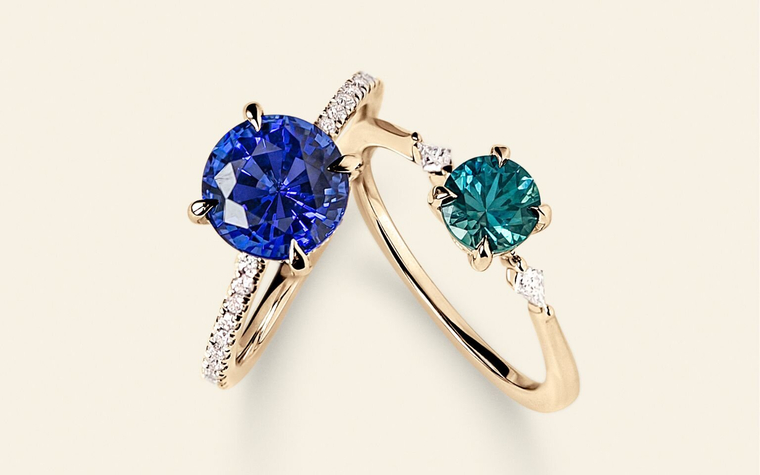
Blue is the most well-known and common sapphire color. Blue sapphires can range from light blue to deep blue and get their color from trace elements like iron and titanium. Sapphires with a medium-dark tone, a true-blue color, and a vivid saturation are typically the most valuable.
Blue sapphires symbolize honesty, calmness, loyalty, and truth — making them particularly popular for engagement rings and significant jewelry pieces. Classic blue sapphires continue to be the most common and recognizable of all sapphire colors.
Pink
Pink sapphires range in color from pale pink to deep pink and can include secondary colors such as purple or orange. Pink sapphires get their color from trace amounts of chromium — the same element that gives rubies their red color, just in smaller concentrations. This can make it difficult to differentiate highly saturated pink sapphires from rubies. The richer the saturation, the more valuable the stone.
Pink sapphires symbolize peace, passion, and truth. They've become increasingly popular in recent years, especially for engagement rings where they offer a distinctive alternative to traditional diamonds or blue sapphires.

Green
Green sapphires come in a range of colors, from a very soft, light green to a bold, deep green that can be similar to an emerald. They symbolize growth and tranquility and get their beautiful green color from trace elements of iron. Though the most coveted green sapphires are pure green, they can often feature secondary colors such as blue or yellow. Pure green sapphires are extremely rare compared to those with mixed hues.
Teal
Teal sapphires feature a stunning blend of green and blue. The most coveted teal sapphires are generally the equal split between blue and green, as this ratio produces a classic and quite beautiful teal.
Teal sapphires symbolize individuality and emotional balance, making them excellent choices for those seeking a unique hue.

White
White sapphires are often set in jewelry as diamond alternatives. They are quite distinct from diamonds and other gemstones like moissanite. Though appearing colorless, they feature much less brilliance and fire than a diamond.
Colorless sapphires bring the same durability as colorful sapphires but with the understated elegance of a clear stone. Because of their similarity to diamonds, white sapphires are popular for engagement rings, earrings, necklaces, and bracelets. They symbolize purity, partnership, and love.
Yellow
Yellow sapphires range in color from very light to an intense, orange yellow. They get their color from trace elements of iron in the mineral corundum and the most coveted versions are orangy-yellow with vivid saturation.
Beyond the classic blue, bright canary yellow sapphires are one of the most popular colors for engagement rings and other fine jewelry such as earrings or necklaces. They symbolize power, grace, and clarity.

Peach
Peach sapphires are often a blend of pink, orange, gold, and yellow. Their warm and subtle hue lends itself particularly well to yellow or rose gold settings. These delicate-colored gems offer a unique alternative to the more common sapphire colors. Peach sapphires pair beautifully with diamonds and other pastel-colored gemstones, making them versatile options for creative jewelry designs.
Orange
Orange sapphires get their color from trace elements of iron. They range in color from a yellowish orange to a more reddish orange, and the best versions feature a strong, pure orange to red-orange with a medium tone and vivid saturation.
Orange sapphires are less common than blue or yellow varieties but provide exceptional brilliance and fire. Orange sapphires symbolize creativity, enthusiasm, and vitality. Their warm, energetic color makes them particularly suitable for statement jewelry pieces.

Purple
Most purple sapphires feature a pure purple as the dominant color or a pinkish purple, though they can also range from medium to dark purple to a more violet purple with weak saturation. They symbolize success, good fortune, and insight.
Padparadscha
Padparadschas are an extremely rare color variation of sapphires with a unique mix of pink and orange. They can range from a pastel to a deeper orange-pink. Some say that their blend of color is reminiscent of a sunset, though in the Sanskrit language, padparadscha refers to the rich color of a lotus blossom.
These extraordinary sapphires typically have a very high value. Their rarity and distinctive color combination make padparadscha sapphires highly sought after by collectors and connoisseurs.

Color Change
The color of these sapphires shifts under different lighting. In the daylight, they may be a blue to violet hue, while under incandescent light, they may be a violetish purple or reddish purple.
These remarkable gems feature multiple crystalline structures that change the way they absorb and reflect light depending on the lighting source. Color change sapphires commonly shift between blue and purple tones, though other color combinations exist. The more dramatic and distinct the color change, the more valuable the stone. These variations are rare and increasingly coveted as a unique alternative to more standard sapphire colors.
Parti and Bi-Color
Parti-colored and bi-colored sapphires show a mix of distinct colors. They feature color zoning (different colors in different places of the gem under the same light), making them very rare and incredibly beautiful.
Bi-color sapphires typically display two distinct colors with a clear boundary between them, such as blue and yellow in the same stone. Parti sapphires generally have three or more colors blending together in a single gem. These unique color patterns occur naturally during the crystal formation process.
Their distinctive appearance makes parti and bi-color sapphires highly sought after by collectors and those seeking one-of-a-kind jewelry pieces. No two parti sapphires are exactly alike, giving each stone a completely unique character.

Sapphire Color Chart
Sapphire color evaluation chart considers three primary factors:

Sapphire Color Grading
Sapphire color grading is a complex process that evaluates the stone's hue, tone, and saturation to determine its quality and value. Unlike diamonds with their standardized 4 C’s grading system, sapphire color grading varies somewhat between gemological laboratories.
Professional gemologists examine sapphires under controlled lighting conditions to determine their primary and secondary colors, the evenness of color distribution, the presence of color zoning, and the overall visual appeal of the stone.
Generally, sapphires that command the highest prices per carat have:
- Strong, pure primary colors with minimal secondary colors
- Medium to medium-dark tones (not too light or too dark)
- Strong to vivid saturation
- Even color distribution without visible color zoning
- No unwanted color-changing behavior in different lighting
Blue sapphires specifically are evaluated for the purity of their blue color, with the most valuable stones showing a strong blue to slightly violetish-blue hue, medium-dark tone, and vivid saturation.
Hue
Hue refers to the actual color of a sapphire, whether it's a singular, primary color, or multiple colors present within the stone. For example, it is possible to have sapphires that are greenish-blue, violet-blue, or violet-pink. When describing a sapphire, the secondary color is listed first, and the primary color is listed second. In the greenish-blue example, blue is the primary color, and greenish is the secondary color — meaning it's mostly blue with a greenish tint.
Tone
Tone refers to lightness or darkness within a sapphire. While two sapphires may have the same hue, they can have differing tones — for example, one sapphire may be a very light blue, and another may be a deep blue. Both are blue, but the difference between the two is their tone.
Saturation
Saturation refers to the intensity of a sapphire's color. Sapphires with the highest saturations feature a pure color — these are called "vivid" stones. The other saturation grades are strong, medium, fair, and weak. Saturation can be one of the most significant influences on sapphire's value, with preferred stones featuring strong to vivid saturation.
Sapphire Color FAQ
What are Montana sapphire colors?
Montana is known for teal, pale green, and unique silvery-green sapphire colors.
What colors can sapphires be?
Sapphires come in virtually all color combinations: blue, yellow, green, purple, pink, orange, colorless (white), black. The only color sapphire isn’t is red, red sapphires are rubies.
What are the rare sapphire colors?
The rarest sapphire colors include padparadscha (the pinkish-orange to orange-pink variety) and color-change sapphires that dramatically shift hues under different lighting.
What makes sapphires blue?
Blue sapphires get their signature color from trace amounts of iron and titanium in the mineral corundum. When these elements are present during crystal formation, they create the iconic blue hue we associate with sapphires. The intensity and exact shade of blue depend on the precise concentrations of these trace elements. Higher concentrations typically produce deeper, more saturated blues. The presence of other trace elements can influence the blue, creating secondary hues like violet or green.
Are all sapphires blue?
No, sapphires are not all blue. While blue sapphires are the most famous, sapphires naturally occur in nearly every color of the rainbow. By definition, all corundum that is not red is classified as sapphire, regardless of color.
Can sapphires be green?
Yes, sapphires can be green. Green sapphires feature a unique range of colors, from a very soft, light green to a bold, deep green that can be similar to emerald. They get their beautiful green color from trace elements of iron.
Can sapphires be red?
No, technically sapphires cannot be red. Ruby and sapphire are the same kind of gemstone from the mineral corundum. The only difference is that rubies are red while the rest of the corundum gemstone colors are all sapphires, regardless of color.
Any red sapphires are actually rubies. The distinction between pink sapphires and rubies can sometimes be subjective, as the boundary between deep pink and light red is not always clear-cut.
Both sapphires and rubies share the same physical and chemical properties, as they are varieties of the mineral corundum. The only difference is their color, which results from different trace elements during formation.
What is the most expensive sapphire color?
The most expensive sapphire color is the rare padparadscha.
Are green sapphires rare?
Yes, pure green sapphires are extremely rare. While green sapphires do exist, finding specimens with a pure green color (without blue or yellow undertones) is quite uncommon. Most "green" sapphires have significant blue or yellow components that influence their appearance.
What is the rarest sapphire color?
The rarest sapphire color is padparadscha, which features a unique blend of orange and pink.
How many colors do sapphires come in?
Sapphires come in virtually all colors of the rainbow except red (which is classified as ruby). Additionally, sapphires can exhibit numerous secondary hues and color combinations. For example, a primarily blue sapphire might have purple or green undertones, while yellow sapphires might show orange or green secondary colors. The vast color spectrum of sapphires makes them one of the most versatile gemstones for jewelry design, offering options for virtually any color preference or style.
What is a color change sapphire?
A color change sapphire shifts in hue under different lighting. In the daylight, it can be a blue to violet hue, while under incandescent light, it may be a violetish purple or reddish purple. These variations are rare and increasingly coveted as a unique alternative to more standard sapphire colors.
What colors do natural sapphires come in?
Sapphires come in virtually all colors of the rainbow. Natural sapphires get their diverse colors from various trace elements present during formation. Iron and titanium create blue sapphires, chromium produces pink sapphires, and iron alone results in yellow sapphires. The specific conditions during crystal growth determine which elements are incorporated and in what concentrations, creating the remarkable color diversity found in natural sapphires.
What is the most common color of sapphire?
The most common (and most popular) color of sapphire is medium blue.
