Matching Wedding Bands
There are countless options for wedding rings these days—for women and men. The variety of styles available provides ample opportunity for brides and grooms to express their individual style and taste with their wedding band selection. Many couples love the symbolism of matching wedding bands to honor their marriage and commitment. Wearing matching wedding bands is a romantic and enduring way to honor one another.
History of Matching Wedding Bands
Although wedding rings and jewelry date back to era of early Egyptians, it wasn’t until World War II that grooms started wearing wedding rings more routinely. Soldiers found that wearing a wedding ring was a nice reminder of the enduring love and commitment back home.
What are Matching Wedding Bands?
Matching wedding bands are those that a bride and groom select together to align on design, style, and compositional components. Generally, matching wedding bands incorporate some or all of the following:
- The same precious metal—platinum, 18K gold (white, yellow, or rose), or palladium
- The same finish—such as high polish, matte, or hammered
- The same motif, if present—such as a Celtic symbol or heart
- The same gemstones or design elements, if any—diamonds or sapphires, milgrain, braiding, and more
Classic Matching Wedding Bands
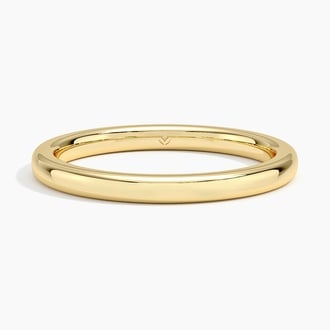
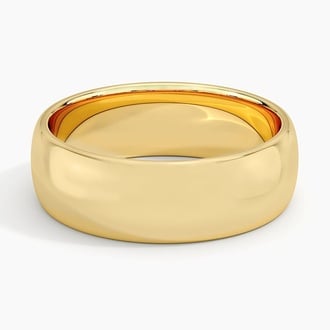
Many couples love the classic elegance of matching wedding bands in plain precious metal—platinum, 18Kgold in yellow, white, or rose, or palladium. You will still want to agree on the details of the bands—whether you like a ring that has rounded edges or if you prefer a more contemporary band with straight edges, often called a flat band, and if you like the shine of a high-polish finish or prefer one that is smooth and matte.
Even when you pick matching precious metal bands, the groom’s ring will generally be a bit wider than the bride’s ring to accommodate the difference in hand size.
Detailed Matching Wedding Bands
Just because you want your rings to match does not mean you need to skimp on detailing and style! The details in your matching wedding rings can be as minimal or as elaborate as you want.
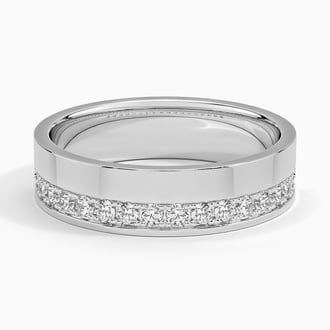
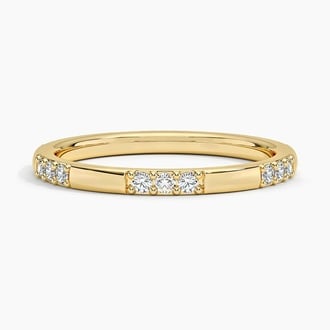
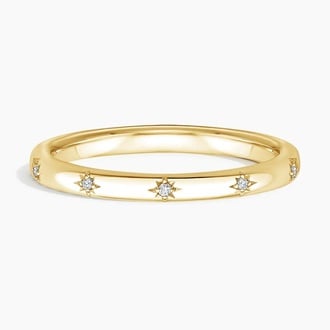
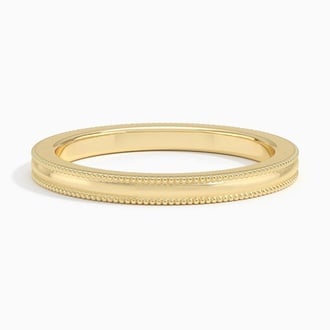
Examples of simple details include a milgrain border or an inlay, a subtle ridge in the precious metal band. A hammered finish can also add texture for a more interesting and unique look. More elaborate details might be an antique scroll design, a braid, or Celtic knots. To really add some brilliance to your matched wedding rings, consider adding diamonds or other gemstones. A very thin vertical row of diamonds or sapphires is a popular option for men that opt for gemstones on their band.
Other Considerations for Matching Wedding Bands
Some romantic ways to approach matching wedding bands are to consider engraving—either the outside or the inside of the bands—with the date, a song lyric, your monogram, or other words of significance to you as a couple. Many couples love the idea of fingerprinting the inside of one another’s band as a special way to personalize their rings.
Coordinating Wedding Bands
If you like the idea of having a wedding band that is similar to your fiancé’s, but don’t necessarily want them to completely match, it is a nice idea to opt for coordinating wedding bands. For wedding bands that coordinate beautifully, you and your fiancé can select one of a couple of design elements to match, such as precious metal choice and finish, but choose some elements that differ to illustrate your individual styles and identities. A good example could be wedding rings that feature white gold and milgrain, his with a milgrain border, hers with milgrain and exquisite diamond detailing (as below).
Final Thoughts
A wedding ring is the most basic and absolute symbol of your commitment to your spouse. Whether you decide to select matching wedding rings, coordinating bands, or completely individual styles, pick what you love—you will wear this ring for as long as you both shall live!
Browse our complete collection of women’s wedding bands and men’s wedding bands.


Leave a Reply