



 Start with Our Diamond Quiz



D Color
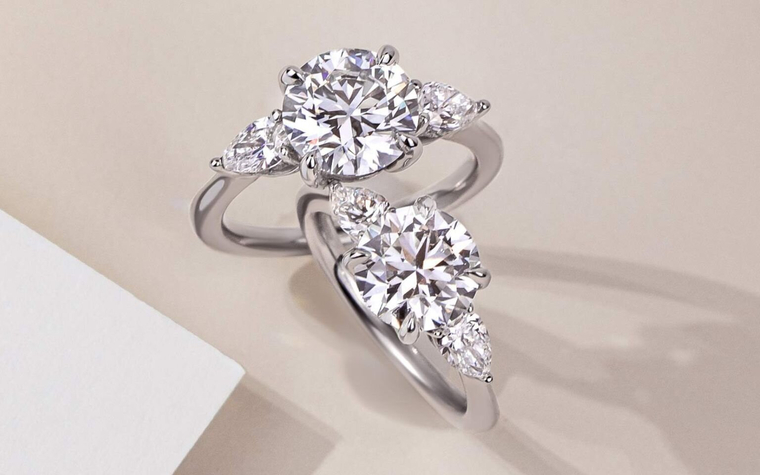
Absolutely colorless or icy white. The highest color grade—extremely rare and most expensive.
What Is Diamond Color?
Diamond color refers to the absence of color within a white diamond. A technically perfect diamond is completely colorless, like a drop of pure water. Most diamonds contain slight traces of yellow, brown, gray, or pink that can subtly affect their appearance.
As one of the 4 Cs used to evaluate diamond quality, color plays a major role in both beauty and value. The less color present, the rarer and more highly graded the diamond will be.
Diamond Color Chart
The Gemological Institute of America (GIA) developed the diamond color scale in the 1940s to standardize diamond color grading internationally. The scale begins with D, representing completely colorless diamonds, and progresses alphabetically to Z, where light yellow, brown, gray, or pink tones become clearly visible.
The scale is divided into five primary groupings:
Group | Overview | Value | Grades |
|---|---|---|---|
Colorless | No detectable color to the naked eye | Highest rarity and price | D–F |
Near Colorless | Slight warmth that is rarely noticeable to the naked eye | Premium look at a lower price point | G–J |
Faint Color | Subtle tint visible to the naked eye in most lighting | Moderate price range | K–M |
Very Light Color | Noticeable yellow, brown, gray, or pink tint in most lighting | Lower price range | N–R |
Light Color | Strong, clearly visible tint | Most accessible pricing | S–Z |
Diamond Color Grades & Ratings
Each letter grade represents a subtle but measurable difference in color within a diamond. To determine a diamond’s color grade, gemologists compare the diamond to master stones (diamonds of known color) under controlled lighting conditions on a pure white background, ensuring accurate and consistent grading.
Below is a closer look at how each color grouping is defined and how those differences can influence both appearance and value.

Colorless Grades: D, E, F
D, E, and F are the colorless grades on the GIA scale. These diamonds contain little to no detectable color and represent the highest quality within the traditional white diamond range.
Colorless diamonds are the rarest and most valuable white diamonds due to their exceptional purity of appearance. Because only an expert can easily distinguish between a D, E, and F diamond under controlled conditions, all three grades offer a premium, icy-white look and are considered top-tier choices when deciding which color is best for you.
- D Color Grade: Completely colorless and the highest possible grade. To the naked eye, D-color diamonds display a crisp, icy whiteness with no visible tint.
- E Color Grade: Colorless in appearance and nearly identical to D. Differences are typically visible only to a trained gemologist.
- F Color Grade: Also considered colorless, though it may show an extremely slight trace of color when viewed face down by a professional. Face up, it appears bright and white.

Near Colorless Grades: G, H, I, J
G, H, I, and J are classified as near colorless grades on the GIA scale. These diamonds may display slight warmth under certain lighting conditions, but they typically appear colorless when viewed face up, especially once set in jewelry.
Near colorless diamonds are a popular choice for engagement rings because they offer a beautiful balance of appearance and value. While subtle differences exist between each letter grade, those variations are often difficult to detect without close inspection or professional comparison, making this range an attractive option for those seeking a bright white look at a more accessible price point.
- G Color Grade: The highest grade within the near colorless range. G-color diamonds display nearly no visible color and appear mostly colorless to the naked eye.
- H Color Grade: Appears largely colorless, though a faint yellow tint may be visible in bright lighting or against a white background.
- I Color Grade: Shows a slight tint that may be noticeable in certain lighting conditions or when compared to higher color grades.
- J Color Grade: Features subtle warmth that can be visible to the naked eye, particularly in larger carat weights or white metal settings.

Faint Color Grades: K, L, M
K, L, and M are considered faint color grades on the GIA scale. Diamonds in this range exhibit a visible warmth that can typically be seen by the naked eye in normal lighting conditions.
While they do not offer the icy-white appearance of higher color grades, faint color diamonds have a distinct character and are often chosen for their warmer tone. They can be especially beautiful in yellow or rose gold settings, where the metal complements and softens the diamond’s natural tint. This range also offers a more accessible price point within the D to Z scale.
- K Color Grade: Displays a noticeable tint that can be visible to the naked eye in normal lighting conditions.
- L Color Grade: Shows a faint but clearly visible warmth in most lighting environments.
- M Color Grade: Exhibits a similar visible tint, offering a distinctly warm overall appearance.
Brilliant Earth does not carry L or M-color diamonds. Additional color grade options may be available by request.

Very Light and Light Color Grades: N–Z
Diamonds graded between N and Z fall within the very light and light color range on the GIA scale. These diamonds display a noticeable yellow, brown, gray, or pink tint that is clearly visible to the naked eye, even without close inspection.
Stones in this category have a distinct warmth that defines their overall appearance. Because their color is more pronounced, they are typically more accessible in price within the traditional D to Z white diamond range. For those who appreciate a visibly warmer tone or are designing with yellow or rose gold settings, these diamonds can offer a unique and vintage-inspired aesthetic.
Brilliant Earth does not carry N–Z -color diamonds. Additional color grade options may be available by request.


How to Choose Diamond Color
Selecting your ideal diamond color grade is about balancing personal priorities, preferences, and the 4 Cs. While higher color grades are technically better, the best choice is ultimately the one that aligns with your aesthetic and budget.
- Consider Diamond Cut: A diamond’s facet type can influence how much color is visible. Brilliant-cut diamonds tend to hide color well due to their many facets, while step cuts, rose cuts, and vintage cuts display color more readily.
- Factor in Carat Weight: Larger diamonds tend to show color more prominently than smaller stones of the same grade. A two-carat J-color diamond may display more warmth than a half-carat J-color diamond simply because of its size.
- Leverage Your Setting’s Metal: The metal you choose can enhance or soften a diamond’s color. D, E, and F diamonds pair beautifully with platinum or white gold, which highlight their icy appearance. Diamonds with slight warmth can look stunning in yellow or rose gold, as those metals complement (and sometimes even neutralize) their tone.
- Balance the 4 Cs: If color is your top priority, you may decide to adjust carat weight, cut, or clarity to stay within budget. If size or sparkle matters most, selecting a near colorless diamond instead of a colorless one can be a smart way to maximize overall impact.
- Consider Center and Side Stone Harmony: If your ring includes accent diamonds, keep in mind that surrounding stones can affect how your center diamond appears. A warmer center stone next to higher color side stones may look more tinted by contrast, while slightly lower color accents can make a center diamond appear even brighter.

Diamond Color Scale FAQ
What is a fancy colored diamond?
What is the best diamond color?
The best diamond color is the one that aligns with your personal preference, setting style, and budget. D color is the highest possible grade and offers a completely colorless appearance. However, many couples find that G or H color provides a nearly identical look at a more accessible price point.
What color is a diamond?
A diamond is typically colorless or near colorless within the D to Z grading scale. Most white diamonds contain subtle traces of yellow, brown, gray, or pink. Diamonds can also naturally occur in fancy vivid hues such as pink, blue, and yellow.
How does diamond color impact price?
Diamond color impacts price by influencing a stone’s rarity and desirability. The less color present in a white diamond, the higher its grade and the greater its cost. In contrast, fancy colored diamonds increase in value as their color becomes more vivid.
What is a good diamond color?
A good diamond color is one that appears white to your eye and complements your chosen setting. Many couples select near colorless grades for their balance of brightness and value. The right choice ultimately depends on how sensitive you are to subtle warmth and how you plan to set the stone.
What colors are diamonds naturally?
Diamonds are naturally found in colorless to light yellow, brown, gray, or pink tones within the D to Z scale. They also occur in rare fancy colors such as blue, green, pink, orange, and red. These natural variations are caused by trace elements or structural changes during formation.
What color diamond is best for an engagement ring?
The best diamond color for an engagement ring depends on your preferred look and metal choice. Near colorless grades such as G and H are popular because they appear bright and white once set. For platinum or white gold, higher color grades enhance an icy appearance, while yellow gold pairs beautifully with slightly warmer tones.
Is color or clarity more important in a diamond?
Color or clarity importance depends on your priorities within the 4 Cs. Many gemologists and jewelers recommend balancing both while prioritizing cut for maximum brilliance. If forced to choose, couples often prioritize color slightly more, as warmth can be easier to notice than minor inclusions.
What color diamond is best for yellow gold?
The best diamond color grade for yellow gold depends on the look you want to achieve. If you want a yellow gold setting with a bright, colorless look, consider G through J, as subtle yellow tones are often neutralized by the warmth of the metal. If you prefer a vintage-inspired aesthetic that embraces warmth, K through M can beautifully enhance that effect while offering a lower price point.
How important is diamond color?
Diamond color is important because it directly impacts a stone’s overall appearance and price. However, how important it is depends on your priorities. If you want a white gold setting and an icy look, color may be your top priority, while those seeking maximum sparkle or a vintage feel may feel more comfortable selecting a lower color grade.


